


ISO 1716 Reaction to Fire Tests for Building Products — Determination of the Heat of Combustion
ISO 1716 Reaction to Fire Tests for Building Products — Determination of the Heat of Combustion
ISO 1716 Building Material Combustion Calorific Value Test‑Standard Title
ISO 1716: Reaction to fire tests for building products — Determination of the heat of combustion ISO 1716: Reaction to fire tests for building products — Determination of the heat of combustion ISO 1716 Building Material Combustion Calorific Value Test‑Standard Introduction
ISO 1716 is analogous to GB/T 14402‑2007 Test method for heat of combustion of building materials, which supports GB 8624 Classification for burning behaviour of building materials and products in China.
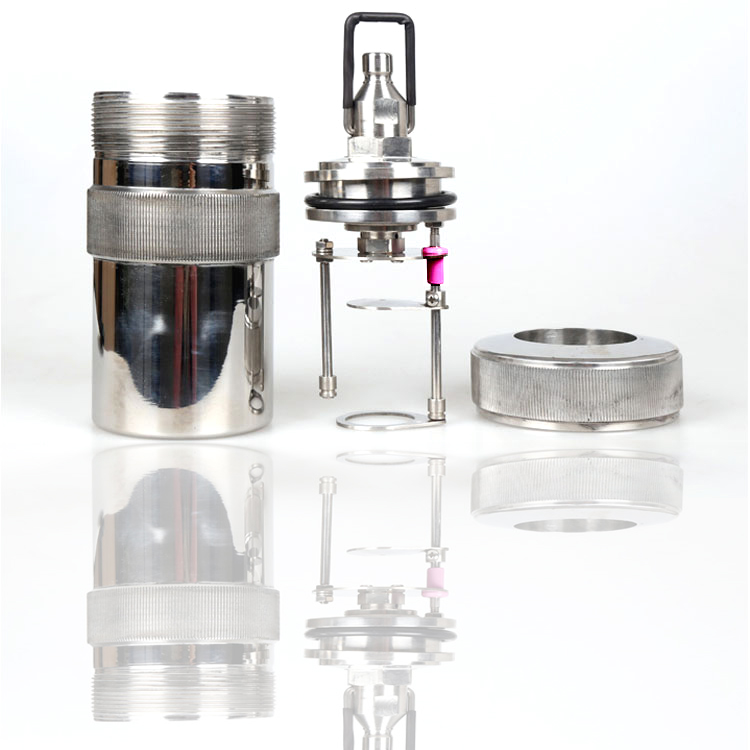
In this test, a specified mass of test specimen is combusted in a bomb calorimeter calibrated by the combustion of standard benzoic acid, under specified ambient conditions, constant‑volume conditions and oxygen‑rich atmosphere. Based on the observed temperature rise, the gross calorific value under specified conditions is calculated with consideration of heat loss and latent heat of vaporization of water.
ISO 1716 Building Material Combustion Calorific Value Test‑Scope
ISO 1716 specifies the test method for determining the heat of combustion of building products using a constant‑volume bomb calorimeter. ISO 1716 describes a method for determining the Potential Calorific Value (PCS).
ISO 1716 Building Material Combustion Calorific Value Test‑Specimen Requirements
Representative specimens shall be taken from homogeneous products or one component of non‑homogeneous products. Specimens shall be obtained from at least five random positions across the full thickness of the product. A minimum mass of 50 g shall be sampled from the main component of a homogeneous or non‑homogeneous product; a minimum mass of 10 g shall be sampled from secondary (non‑substantial) components of a non‑homogeneous product.
ISO 1716 Building Material Combustion Calorific Value Test‑Test Requirements
According to EN 13501‑1 Fire classification of construction products and building elements, the following ISO 1716 performance requirements apply to A1 and A2 classes:
For classes A1, A1f1 and A1L, all four requirements below shall be satisfied simultaneously:
Potential Calorific Value (PCS) of main components of homogeneous or non‑homogeneous products ≤ 2.0 MJ/kg;
Potential Calorific Value (PCS) of external secondary components of non‑homogeneous products ≤ 2.0 MJ/kg;
Potential Calorific Value (PCS) of any internal secondary component of non‑homogeneous products ≤ 1.4 MJ/m²;
Potential Calorific Value (PCS) of the complete product ≤ 2.0 MJ/kg.
For classes A2, A2f1 and A2L, all four requirements below shall be satisfied simultaneously:
Potential Calorific Value (PCS) of main components of homogeneous or non‑homogeneous products ≤ 3.0 MJ/kg;
Potential Calorific Value (PCS) of external secondary components of non‑homogeneous products ≤ 4.0 MJ/kg;
Potential Calorific Value (PCS) of any internal secondary component of non‑homogeneous products ≤ 4.0 MJ/m²;
Potential Calorific Value (PCS) of the complete product ≤ 3.0 MJ/kg.